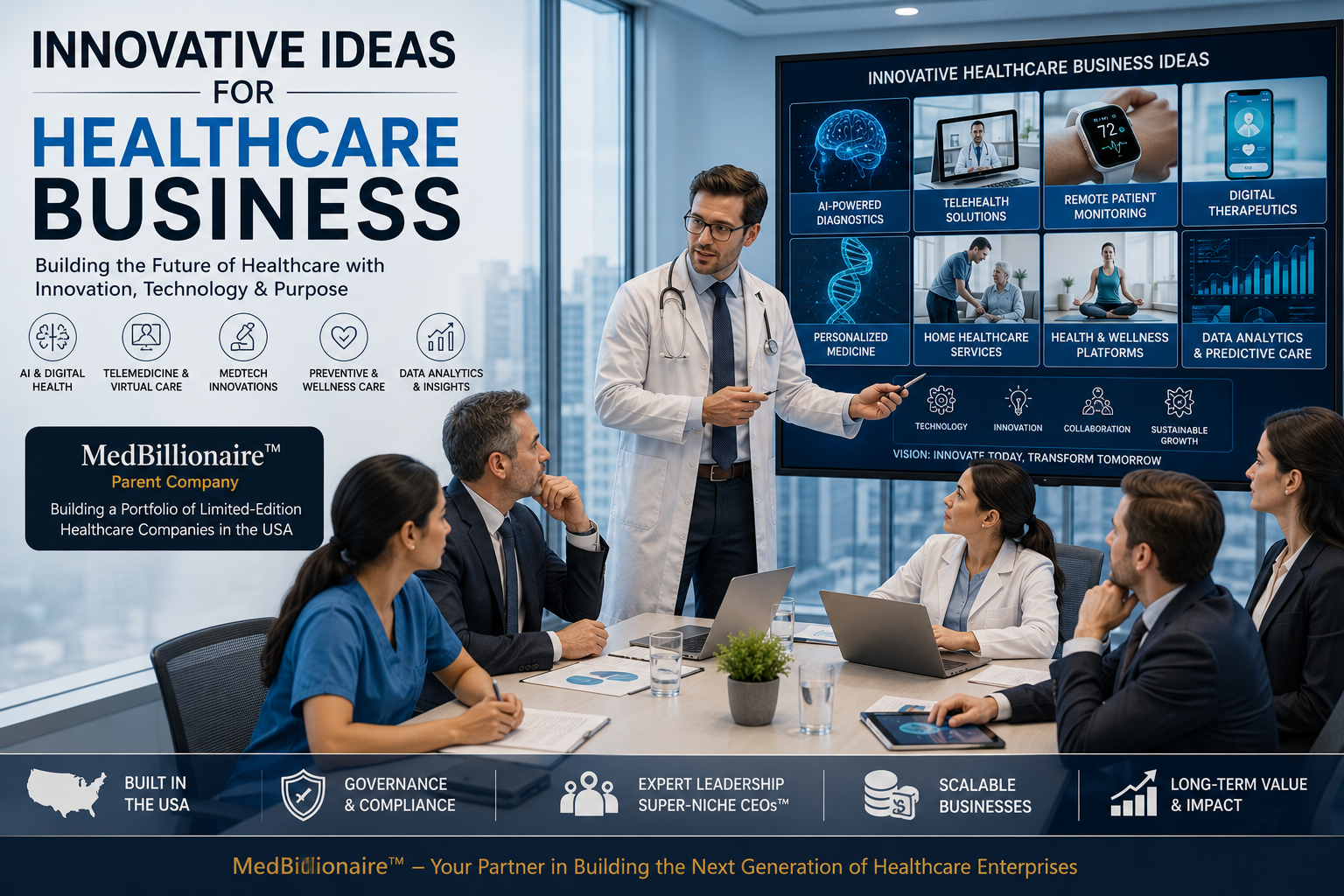
Healthcare has become one of the
world's most dynamic industries. The traditional model of hospitals, clinics,
and pharmacies is rapidly evolving into a technology-enabled ecosystem powered
by artificial intelligence (AI), digital platforms, advanced medical devices,
preventive care, remote monitoring, and data-driven decision-making.
As patient expectations change and
healthcare systems embrace digital transformation, entrepreneurs are looking
beyond conventional business models. Today's innovative ideas for healthcare
business often combine medicine with software, automation, financial
technology, analytics, and connected care.
Whether the goal is improving
patient access, reducing administrative burden, expanding preventive care, or
enabling precision medicine, innovation is shaping every corner of the
healthcare economy.
What Makes a Healthcare Business Innovative?
Innovation in healthcare is not
limited to inventing new medical devices. It often involves improving the way
healthcare is delivered, managed, financed, or experienced.
Common characteristics of innovative
healthcare businesses include:
- Technology-enabled operations
- Digital patient engagement
- AI-assisted decision support
- Scalable service delivery
- Strong governance and compliance
- Preventive healthcare focus
- Efficient workflows
- Data-driven management
- Interdisciplinary collaboration
- Sustainable long-term planning
Organizations that integrate these
principles are often better prepared to adapt to future healthcare needs.
Emerging Healthcare Business Ideas
AI-Powered
Clinical Decision Support
Artificial Intelligence can help
healthcare professionals analyze large volumes of medical information, identify
patterns, and support clinical workflows. While AI assists healthcare
providers, medical decisions continue to require qualified human oversight.
Telemedicine
and Virtual Care
Virtual healthcare platforms connect
patients with physicians, specialists, and allied healthcare professionals
regardless of geographic location. Telemedicine continues expanding access to
healthcare while improving convenience for many patients.
Remote
Patient Monitoring
Connected healthcare devices enable
clinicians to monitor patient health between appointments. These technologies
support chronic disease management, preventive healthcare, and early
intervention.
Preventive
Healthcare Businesses
Preventive healthcare organizations
focus on reducing disease risk through health screenings, nutrition guidance,
wellness programs, vaccinations, lifestyle coaching, and patient education.
Digital
Mental Health Platforms
Technology has created new
opportunities for counseling, behavioral health support, wellness coaching, and
digital mental health services while expanding access to professional care.
Medical
Technology (MedTech)
Medical technology companies
continue developing innovative diagnostic equipment, wearable medical devices,
robotics, imaging systems, and surgical technologies that improve healthcare
delivery.
Healthcare
Software Companies
Healthcare software organizations
build electronic health records, appointment scheduling systems, patient
portals, cybersecurity solutions, practice management software, and healthcare
analytics platforms.
Home
Healthcare Solutions
As populations age and demand for
community-based care increases, home healthcare continues to become an
important segment of modern healthcare delivery.
AI Is Changing the Healthcare Landscape
Artificial Intelligence is
transforming many aspects of healthcare operations.
Healthcare organizations
increasingly use AI to assist with:
- Workflow automation
- Administrative efficiency
- Predictive analytics
- Medical imaging support
- Appointment scheduling
- Revenue cycle management
- Resource planning
- Population health analysis
- Clinical documentation
- Operational insights
Responsible implementation requires
governance, transparency, and appropriate clinical oversight.
MedTech and FinTech Are Creating New Possibilities
Healthcare innovation extends beyond
clinical care.
Medical Technology (MedTech) drives improvements in diagnostics, medical devices,
monitoring systems, and treatment capabilities.
Financial Technology (FinTech) supports digital payments, financial management,
operational efficiency, and patient billing experiences.
Organizations that thoughtfully
integrate AI, MedTech, and FinTech may improve operational performance while
enhancing patient experiences.
Building Strong Healthcare Organizations
Successful healthcare enterprises
are typically built upon more than technology alone. Long-term sustainability
often depends on:
- Ethical leadership
- Regulatory compliance
- Transparent governance
- Skilled healthcare professionals
- Cybersecurity
- Quality assurance
- Continuous innovation
- Patient-centered service
- Financial responsibility
- Strategic planning
Together, these elements create a
foundation for resilient healthcare organizations.
MedBillionaire™'s Published Business Vision
According to information published
by MedBillionaire™, the company describes itself as the parent
organization of a portfolio of healthcare-focused businesses. The company
states that its broader vision combines healthcare innovation with technologies
such as Artificial Intelligence (AI), Medical Technology (MedTech), and
Financial Technology (FinTech), alongside corporate governance and strategic
business development.
According to the company's published
materials, this ecosystem is intended to support the development of healthcare
enterprises operating within structured governance frameworks and
technology-enabled business environments. These descriptions reflect the
company's stated vision and business model.
A Focus on Structured Healthcare Business Development
According to its published
information, MedBillionaire™ states that it develops a curated portfolio of
healthcare businesses rather than an unlimited number of enterprises. The
company describes this approach as one designed to encourage focused
development, operational planning, innovation, and long-term scalability.
The company further states that
businesses within its ecosystem are incorporated, or intended to be
incorporated, in the United States, and are supported through strategic
planning, governance, and technology integration.
Top
Healthcare Businesses
Healthcare encompasses many high-impact
sectors, including medical clinics, diagnostic laboratories, telemedicine, home
healthcare, digital health, wellness centers, medical technology, and
healthcare software. Understanding these sectors can help entrepreneurs
identify areas that align with their expertise and long-term goals.
Healthcare
Businesses for Sale
Some entrepreneurs choose to acquire
existing healthcare businesses rather than build from scratch. Evaluating
governance, compliance, licensing, operational systems, technology infrastructure,
and financial information is an important part of the due diligence process
before acquiring any healthcare business.
Healthcare
Business Licensing Opportunities
Healthcare organizations operate
within regulated environments. Licensing and compliance requirements vary by
jurisdiction and business type, making legal and regulatory planning an
essential component of responsible healthcare entrepreneurship.
Creating an Innovation Ecosystem for Healthcare Businesses
Successful healthcare organizations rarely rely on a single service or
product. Instead, they often develop an ecosystem where technology, healthcare
professionals, business operations, patient engagement, compliance, and
continuous innovation work together to deliver value.
An innovation ecosystem may include:
·
Artificial Intelligence (AI) for workflow
optimization and data analysis
·
Medical Technology (MedTech) for diagnostics and
treatment support
·
Digital health platforms for patient engagement
·
Secure healthcare software
·
Electronic Health Records (EHR)
·
Telemedicine services
·
Healthcare analytics
·
Financial management systems
·
Preventive healthcare programs
·
Regulatory compliance frameworks
The integration of these elements helps healthcare businesses become more
efficient while supporting quality patient care.
Healthcare Entrepreneurship Requires More Than a Good Idea
Many healthcare entrepreneurs begin with an innovative concept. However,
transforming an idea into a sustainable enterprise requires careful planning,
execution, and governance.
Successful healthcare organizations often invest in:
Strategic Planning
A well-defined business strategy establishes long-term objectives,
operational priorities, financial planning, and measurable performance
indicators.
Market Research
Understanding patient demographics, healthcare trends, competitors, and
emerging technologies helps organizations identify opportunities and reduce
uncertainty.
Regulatory Awareness
Healthcare businesses operate within regulated environments where licensing,
privacy laws, employment regulations, and quality standards play an important
role.
Technology
Integration
Digital infrastructure enables healthcare organizations to improve
communication, patient management, operational efficiency, and decision-making.
Continuous
Improvement
Healthcare is constantly evolving. Organizations that regularly evaluate
performance and adopt appropriate innovations are often better prepared for
future challenges.
Corporate Governance Builds Confidence
Governance is one of the most important components of a successful
healthcare enterprise. Transparent leadership and structured decision-making
support accountability, operational consistency, and long-term sustainability.
Key governance principles include:
·
Ethical leadership
·
Transparent reporting
·
Financial accountability
·
Risk management
·
Regulatory compliance
·
Internal controls
·
Data security
·
Organizational oversight
Strong governance can also help organizations build confidence among
patients, healthcare professionals, business partners, and stakeholders.
Technology Is Creating New Healthcare Business Models
Healthcare innovation continues to produce entirely new categories of
businesses. Entrepreneurs are increasingly exploring opportunities in areas
such as:
Digital Therapeutics
Software-based healthcare interventions designed to support the prevention
or management of specific medical conditions.
Personalized
Healthcare
Organizations use data-driven insights to tailor healthcare recommendations
and services to individual patients.
Healthcare Robotics
Robotics support surgical procedures, rehabilitation, logistics, and
operational efficiency within healthcare environments.
Wearable Medical
Technology
Smart medical devices allow continuous monitoring of health indicators and
provide valuable information to patients and clinicians.
Population Health
Analytics
Organizations analyze healthcare data to improve preventive care, identify
trends, and allocate resources more effectively.
Collaboration Drives Healthcare Innovation
Innovation rarely happens in isolation. Healthcare businesses frequently
collaborate with:
·
Hospitals
·
Universities
·
Research institutions
·
Medical professionals
·
Technology companies
·
Pharmaceutical organizations
·
Government agencies
·
Healthcare associations
Collaboration encourages knowledge sharing and helps accelerate the
development of practical healthcare solutions.
MedBillionaire™'s Published Ecosystem Concept
According to information published by MedBillionaire™, the
company describes its business model as an integrated ecosystem that combines
healthcare innovation, Artificial Intelligence (AI), Medical Technology
(MedTech), Financial Technology (FinTech), and corporate governance.
The company states that this ecosystem is intended to support healthcare
businesses operating within structured business frameworks that emphasize
operational planning, technology adoption, and long-term enterprise
development.
The company's published materials also describe concepts such as Pre-Public
Company™ (PPC™) and Super-Niche CEOs™. According to
MedBillionaire™, these concepts are intended to represent internal
organizational and leadership approaches within its business ecosystem. These
descriptions reflect the company's stated vision and should be understood as
descriptions of its business model rather than independently verified outcomes.
Healthcare Company Buying Considerations
Whether acquiring an existing healthcare business or evaluating a franchise
opportunity, prospective buyers should perform careful due diligence.
Important areas to evaluate include:
·
Business structure
·
Licensing and permits
·
Healthcare compliance
·
Technology infrastructure
·
Financial performance
·
Legal documentation
·
Employment agreements
·
Intellectual property
·
Market opportunities
·
Operational systems
Independent legal, accounting, and financial advice can help prospective
buyers understand the opportunities and obligations associated with healthcare
business ownership.
Medical Clinic Franchise Opportunity
Medical clinics remain among the most recognized healthcare business models
because they address ongoing healthcare needs within communities.
Modern clinic operations increasingly incorporate:
·
Digital appointment scheduling
·
Telemedicine consultations
·
Electronic Health Records
·
Preventive care programs
·
AI-assisted administrative tools
·
Secure patient communication
·
Healthcare analytics
These technologies help improve patient experiences while supporting
efficient healthcare operations.
Buy a Healthcare Franchise
Healthcare franchises provide entrepreneurs with structured operational
systems, established procedures, and ongoing organizational support.
Before purchasing any healthcare franchise, entrepreneurs should consider:
·
Applicable licensing requirements
·
Corporate governance
·
Technology capabilities
·
Patient service standards
·
Financial planning
·
Staffing requirements
·
Regulatory obligations
·
Long-term operational goals
Thoughtful planning supports responsible healthcare entrepreneurship.
Top Healthcare Businesses
Healthcare continues expanding across numerous specialized industries.
Examples include:
·
Primary Care Clinics
·
Specialty Medical Centers
·
Concierge Medicine
·
Telemedicine
·
Diagnostic Laboratories
·
Medical Imaging Centers
·
Pharmacy Businesses
·
Home Healthcare
·
Medical Equipment Companies
·
Healthcare Software
·
Wellness Centers
·
Rehabilitation Facilities
·
Preventive Healthcare Services
·
Medical Technology Companies
Each sector addresses different healthcare needs while contributing to the
broader healthcare ecosystem.
Frequently Asked Questions
What are some innovative healthcare business ideas?
Innovative healthcare business ideas include AI-assisted healthcare
software, telemedicine platforms, remote patient monitoring, home healthcare
services, medical technology companies, preventive healthcare programs,
wellness centers, healthcare analytics, and digital mental health platforms.
Why is healthcare considered a growing business sector?
Healthcare demand continues to increase because of aging populations,
technological advancements, preventive medicine, chronic disease management,
and greater access to digital healthcare services.
What should entrepreneurs consider before starting or acquiring a
healthcare business?
Entrepreneurs should evaluate licensing requirements, regulatory compliance,
governance, financial planning, technology infrastructure, staffing, market
demand, and long-term business strategy. Professional legal and financial
advice is recommended.
How does technology influence healthcare businesses?
Technology improves operational efficiency, patient communication,
diagnostics, healthcare analytics, workflow automation, and access to care
through digital platforms and connected devices.
What does MedBillionaire™ say about its business model?
According to information published by the company, MedBillionaire™ describes
itself as the parent company of a portfolio of healthcare-focused businesses.
The company states that its business model incorporates AI, MedTech, FinTech,
corporate governance, and strategic business development while developing
healthcare enterprises within its broader ecosystem.
What is the importance of corporate governance in healthcare?
Corporate governance helps healthcare organizations establish transparency,
accountability, ethical leadership, regulatory compliance, financial oversight,
and sustainable long-term management.
Conclusion
The future of healthcare will be shaped by organizations that combine
medical expertise with responsible innovation, digital transformation, and
effective governance. From AI-powered healthcare platforms and telemedicine to
preventive care, MedTech, and healthcare software, new ideas continue to
redefine how healthcare is delivered and managed.
For entrepreneurs, innovation should be accompanied by careful planning,
regulatory awareness, and a commitment to quality care. According to its
published information, MedBillionaire™ describes its role as
the parent company of a healthcare-focused ecosystem that integrates AI,
MedTech, FinTech, corporate governance, and strategic business development. As
with any business opportunity, readers should independently evaluate available
information, review applicable legal documentation, and seek qualified
professional advice before making business or investment decisions.